
obligatory one month without social media on my phone substack essay (contrarian edition)
it didn't change my life

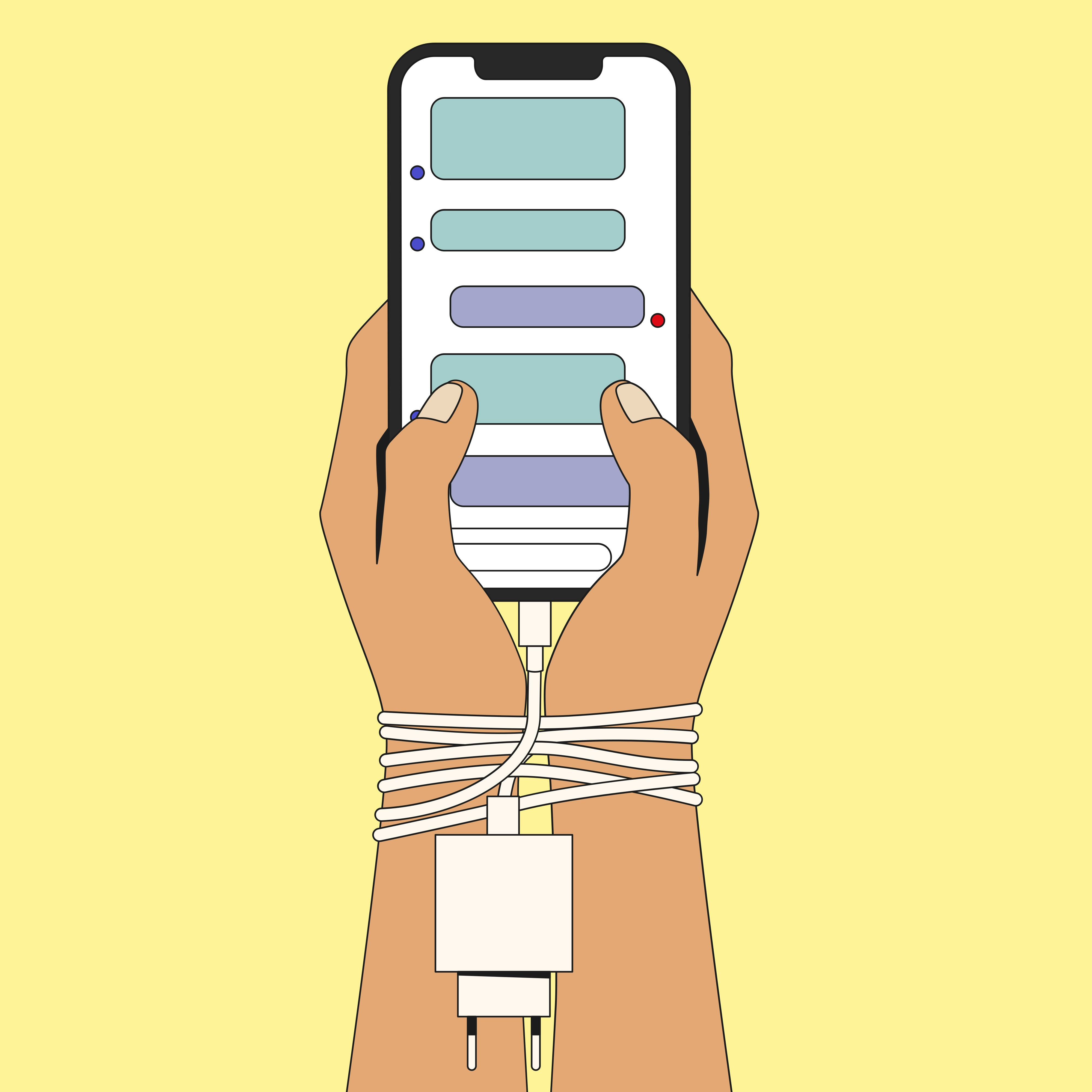
Over one, possibly two months ago today (I lowkey lost track of time) I deleted ‘the socials’ off my phone. (Disclosure: I kept Instagram only because my friends insist on using it as a messaging app.) From that unmarked day forward, my social media use became explicitly fixed in time (brutal and uncompromising filters) and space (on my desktop computer in my house.) I did this without making a grand announcement (e.g. “friends, life’s been rough lately and I’m gonna need to be away from the internet for a while, so don’t worry about me…”) or without hand-wringing about whether I should identify as an addict (sorry but I don’t think it’s the same.)
I also failed to prepare some preface on here about how we’re all addicted to dopamine and need to take back our attention from big tech or whatever. I honestly hesitated even writing this essay in the first place because alongside "24 year olds applying Susan Sontag to their situationships,” and “disgruntled writers disappointed with their careers railing against MFA degrees,” the “I gave up my phone and became a genius” essay is a load bearing pillar of the substack newsletter as, like, a genre of writing. To name just one example, I’m sure you’ve all encountered that one essay on here that somehow never stops circulating where the author bloviates in the second person for thousands of words about how we are nothing but desperate little bug men whose vital life forces are being sucked out of us minute by minute by The Screen.
Then there’s the whole phenomenon of being an ‘anti-phone influencer,’ which of course requires being more on your phone than the majority of people. But it’s not just Substack. Seemingly every month, even The New Yorker, with its “Infinite Scroll” column publishes some lame, maudlin take or another about how phones are bad for art or literature or for ourselves and about why it’s imperative and life-changing to get off them. It’s not that the basic ideas presented there are incorrect — far from it — it’s that every single one of these essays is exactly the same.
I’m going to boldly go on the record here and say that I think the majority of this content has become so grossly exaggerated and emotionally overwrought that it may even actively deter people from logging off. (This does not mean I’m going to say that being on your phone is good, actually. Being on your phone is, in fact, bad for your brain and for society.) It also doesn’t take a phone-free genius to realize that such histrionics exist for a reason: many analog warriors have something to sell, like a newsletter or a book1 or a dumb phone that’s as expensive as a smart phone, as though most of this is the device’s problem rather than the user’s (once you delete the social media apps themselves, the iPhone is not that enticing), or an online webinar teaching you how to be present in the world as though you were born with the right sensory parts but are unfortunately too stupid to use them.
Meanwhile, the purported benefits of a phone-free life — while there are many — are almost comically exaggerated. Quit your phone and you will read the complete works of Dostoyevsky in a month! Quit your phone and “be in the world” and you will meet the love of your life! Quit your phone and become a humble skilled craftsman in a cozy woodland cottage and you will resist capitalism! Quit your phone and change the nature of time and the universe!
What amazes me so much about these notions is how similar they are to discourses from the beginning of modernity, when our perception of time, disconnected from the rhythms of the world, became abstracted, seen as a meaningless container shuttling from moment to moment leaving it up to us to give that moment meaning. Walter Benjamin called this fixture of modern life homogenous, empty time and believed it to be a real sickness inhibitive of social progress, though these days it’s nothing special. Updated challenges to this phenomenology of time are always welcome, however the phone essay is not that girl. The phone essay explains to us: Today we find ourselves stuck in the cafeteria of ultramechanized capitalism where the sushi of time goes round and round on the carousel. How tragic that we don’t pick a plate and eat it because we’re on our damn phones!!!! Or something!
The other common way of thinking about phone time is couched in the language of time productivity. (AKA a midwit version of EP Thompson time, if we’re keeping track of our Marxists.) By this account, we are wasting our time, time that could be literally productive in the Marxian sense of selling our labor power or in the Marxian sense of doing basically idyllic unalienated, fullfilling labor such as scrapbooking or reading the complete works of Dostoyevsky in a month.
Thus, invoking (whether unwittingly or not) the utopian visions of the Arts and Crafts movement which thought, a bit too late, that the tide of mechanical reproduction and the resulting deskilling and abstracting of labor could still be turned by a return to handicraft, today’s analog influencers want you to believe that if you buy their course and put down your phone, you, too, can resist the world’s immiserating forces by using your hands to make things that matter, such as this needlepoint pillow kit that says ‘log off,’ which you can buy via this Etsy referral link for $39.99.
Then there’s the matter of ‘reshaping one’s mind’ or whatever. I’m sure we’ve all seen content from people who claim they have ‘relearned how to read’ after doing away with their phones, detailing how they went from spending 15 hours on Tiktok to reading the complete works of Dostoyevsky in a month. Replacing the phone with books is objectively a good thing to do, one that will certainly help reverse your brain’s unnatural atrophy. However, to me, thinking about reading in this way — as a medicine for a sickness or as a social duty — is counterintuitive. Reading should be something we do for pleasure or erudition, not something we do as a solemn and burdensome cure for a perceived moral and cognitive rot. If we immediately associate not reading with shame, well, that makes it really easy to create a terrible feedback loop that pops back up whenever getting back on the attention pony feels difficult.
Beyond this weird attitude towards reading and one’s other preoccupations, many of the depictions of phone life made by phone detox content are just straight up kind of ridiculous. Paragraphs upon paragraphs are spent detailing the hard and brutal struggle to put the phone down in a way reminiscent of the gonzo addiction memoirs that were popular in the mid-2000s. When the task is framed as, for lack of a better term, fentanyl-esque, would you, personally, want to attempt it? It doesn’t take a cognitive scientist to realize that when we expect something to be extremely difficult, surprise, our brains tend to make that a self-fulfilling prophecy.
I would say that the most important thing to keep in mind when quitting anything is that it is possible to change one’s behavior and have agency in one’s actions, thoughts, and feelings. This may sound obvious but you wouldn’t believe how many people are willing to cosign the idea that they are slaves to dopamine, that they are irretrievably enmeshed in the Matrix world of Screen Time Capitalism or whatever, that they are helpless to control their own minds. I have a serious mental illness that requires neurochemical modulation and even I can log off.
In order to quit, one must realize that what is really being interrogated is not necessarily the thing itself (and yes this includes Phone Capitalism) but the behavior and what we get out of it. What do we want from Phone World? Is it companionship? Prestige? Reassurance seeking? Attention? Entertainment? What do we get from doomscrolling? Why even call it that? Can we not use grown-up words like self-soothing, numbing, rumination, avoidance, paranoia. insecurity, anxiety, despondency, resentment, despair, anger etc. to describe our behaviors and the feelings behind them? If we can name these things, these actions, these needs, only then can we actually take the necessary steps to put the phone down and seek either help for ourselves or satisfaction of these needs in less maladaptive ways, because that’s the thing: ultimately, phone use is not an existential battle between the human mind and nefarious powerless-making material and mechanical forces — it is a behavior.
As far as the detox process itself goes, mental and behavioral patterns take both effort and time to change. They must be replaced with new behaviors, and no, I don’t mean picking up heavy Russian novels. I’ve been through an entire round of Dialectical Behavior Therapy at this point which, contrary to the naysayers who claim that skills-based therapy only makes us more comfortable with the intolerable world we’ve been given, is actually really useful if you repeatedly engage in self-harming or self-sabotaging habits.
The basic point of DBT is that you can make small interventions, many of which sound silly, to put some distance between you and your impulsive behaviors. This means sometimes literally stopping what you’re doing and taking a breath, shit like sucking on sour candy or sticking your face in the freezer, picking some other time-bound behavior (calling a friend, taking a walk or a shower, listening to music) or being mindful of the urge without beating yourself up for it. This stuff may seem ridiculous but moment-to-moment it is kind of the only way to curb strong emotional drives. So (genuinely) maybe check that out!2
The other advice I want to give is that regardless of what one does with one’s newfound quiet time, putting the phone down itself is enough. You don’t need to go form a political party or read the entire work of Dostoyevsky in a month with all that time. The harsher, more disappointing, more Benjaminian reality is that, when abstaining from our phones, when we suddenly feel the embodied length of a minute — for me the airplanes landing at O’Hare as seen through my living room window, the shuttling of the train car between Morse and Loyola, the birds gathering around the bird feeder — we soon realize, horribly, that we don’t actually have much free time to begin with. Those three minutes at the bus stop may feel longer without Instagram but they are still only three minutes.
So! Let me tell you about the dull reality of my life as someone who has detoxed from their phone. In the real world, phone in hand or not, I, like most of us have to work or have other obligations that fill my time and make me very exhausted. Without my phone in hand, I am not writing a novel or reading four. Instead, I scramble to walk my dogs, take a shower, and groom myself before going to therapy. Then I am in therapy. Then I am at the doctor. (I have been on leave for two months to take care of my mental health.)
In the interim, between all those things, I am walking to and from the train and bus. I am buying electrolyte tablets at CVS. I am listening to Mahler’s 6th symphony (the Michael Tilson Thomas/San Francisco Symphony recording that Apple Classical recommends which is actually really quite excellent.) I am staring into space. I can’t tell you how often I stare into space, lost in my own thoughts. I am watching the people on the train. When someone beautiful gets on the train I stare at them as inconspicuously as possible for as long as possible. (I am bisexual so everyone is beautiful.) I have memorized the residential towers along the Red Line, both because I famously like buildings and because I am bored. I still allow myself to play the Wordle every morning.
Rather than the complete works of Dostoyevsky, so far I have read two books during my ongoing phone fast: My Antonia (a novel most people read in high school) and a very slender introductory volume to the work of Melanie Klein. I am currently reading Sophie Strohmeier’s All Girls Be Mine Alone which is about a frustrated lesbian at a Musikgymnasium in Vienna. (I’m not yet sure whether this is a great book but it is a book meant for me specifically.)
When I am excruciatingly bored (no book on me, lots of time to fill, no way of filling that time with legitimate work) I take up a project I call 100 Siegmunds. We all know who Siegmund is at this point, but if you’ve never been here before, Siegmund is the woebegone, proto-feminist protagonist of Wagner’s opera Die Walküre. (He runs off with his twin sister, the heroine Sieglinde, a crime for which he is eliminated execution style by the gods.) The concept of 100 Siegmunds is exactly what it sounds like: 100 character studies about the same guy. It is very important as a writer to have some absolute bullshit to toss around in your spare time, and so I have a whole notebook full of Siegmund wandering, yearning, weeping, fucking, dying, being reincarnated, dreaming the dreams of other people and other such things. That’s what I do when I’m waiting to get my prescriptions filled at CVS.3
At any rate (this essay is overlong) getting off my phone and limiting my screen time has not radically reoriented my existence. It has not made me suddenly erudite, though it has welcomed considerable peace into my life. It is actually very relieving to not have four hundred commentators yelling in your ear about how we are all going to die from the climate change no one in power is doing anything to address whenever it gets a little smoky outside even though this is, in fact, true.
Overall, I have very little to say about the online culture I am missing. Truly. After about a week without your phone, one day you’ll wake up and realize that only thing you’re missing is the Department of Education tweeting an AI-generated video of a disgusting little puppy singing the way you move, the way you want to kiss me… (I will not link to this.) The whole rest of the internet is basically like that now anyway. Despite my abstinence, I still manage to keep in touch with folks and read Neocities literary journals once a day. Everything else I need exists within the domain of the Financial Times app.
Without online, I am also noticing a lot of offline culture I definitely have missed, such as things like “Banana Ball” and a show called “The Amazing Digital Circus” which I find visually painful to look at. I’m not saying these are good, but they are definitely around. I guess I’ll end this by saying that if you have no free time, not using your phone won’t give you more of the time you don’t have — you’re just filling the same small container with a different substance, one that’s most likely better than Instagram. Similarly, if the world is insane-making, logging off won’t change that world. It does, however, make you more aware of your place in it, even if your place is on the bus writing some bullshit in a notebook you hope no one ever reads.
When Jenny Odell wrote How to Do Nothing she basically opened and shut this door as far as I’m concerned.
DBT group therapy is mega cheap. The practice I go to does it for $36 a week.
The thing about fucking around with some project like this is that a lot of the material can and will end up in work that is completely unrelated in ways that will surprise even you.
as an (almost) doctoral-level integrative therapist I can’t express enough how happy it makes me to see someone I respect and admire say something positive about DBT
As someone who was so addicted (or whatever you want to call it) to Twitter that I had to get my husband to change my password in order to quit, I will say I agree with all of this, but one thing that is objectively better about not being on phone is you realize that online discourse impacts you basically not at all if you don't know about it. If people are mad about something on whatever platform, that usually barely matters, and maybe you'll eventually hear about it in a real article but probably not and you definitely don't need to be losing your mind about it or spending all day arguing with strangers. So that has been good for me! I also highly recommend doing this without telling people because it's so fucking embarrassing to do a big "I'm taking a break from socials" post and then be back on two days later.